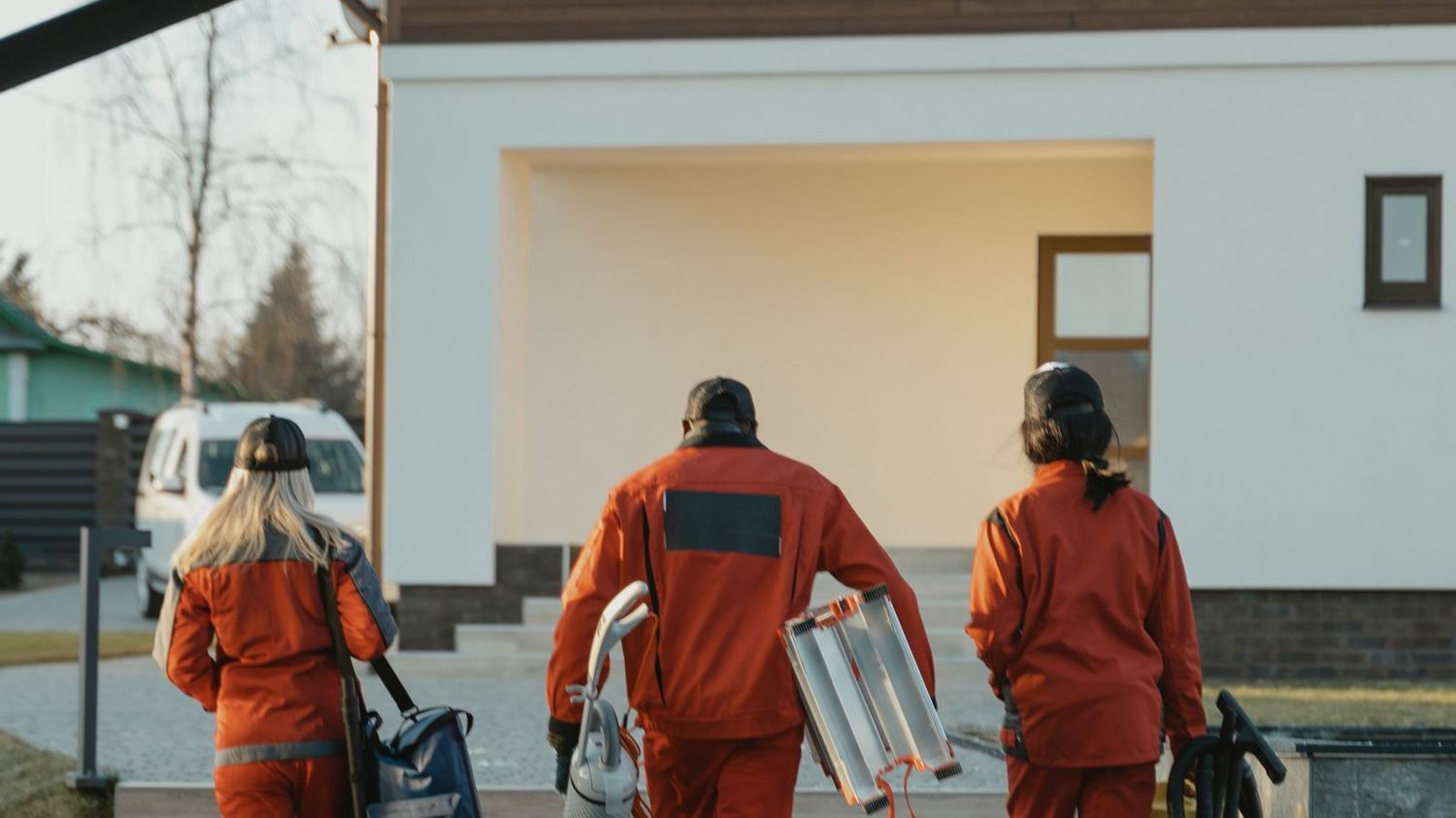
Demand for residential cleaning has grown as households prioritise time and outsource domestic work, and as the number of older adults living independently increases. The market is fragmented between national franchises, regional companies and independent operators, with online booking platforms adding price competition. Recurring service is the economic engine of the industry because acquisition cost is recovered over many visits, so companies value customers who can be converted from a first booking into a schedule. Consumers place a premium on reliability, trustworthy staff and clear pricing, and they typically choose the company that responds first with a confident quote.
Understanding why a cleaning services consumer reaches out is the foundation of any effective inbound call program. This article breaks down the triggers behind cleaning services intent, the signals that separate a ready buyer from a casual researcher, and the qualification criteria buyers in the Home Services vertical typically apply.
Who the cleaning services consumer is
Dual-income households, busy professionals, families with young children, older adults who need help maintaining their homes, and tenants or sellers preparing a property for handover. The most valuable segments are households seeking recurring service in larger homes, and move-out or post-renovation deep cleaning customers who can be converted to ongoing plans.
Because this profile is specific, the campaigns that reach it must be specific too. Generic home services messaging attracts a broad, low-converting audience. Messaging built around the exact situation of a cleaning services consumer attracts people who need a solution now.
The triggers behind cleaning services intent
Intent rarely appears from nowhere. It is triggered by a change in the consumer's circumstances. The most common cleaning services triggers we see across campaigns are:
- Searching for house cleaning services near me or maid service
- Moving out of a rental or preparing a home for sale or new occupants
- Preparing for holidays, guests or a special event
- Recently completed a renovation and needs post-construction cleaning
- Life change such as a new baby, new job or health issue reducing time for chores
- Dissatisfied with a current cleaner's reliability or quality
Each of these moments opens a window in which the consumer is actively comparing options and willing to talk to a provider. The window is often short, which is why real-time delivery matters so much in this category.
Separating intent from research
Not every search is a buying signal. Consumers researching "house cleaning services near me" may be early in their journey, while someone searching "deep cleaning service" is usually much closer to a decision. An inbound call is itself a strong filter: the consumer has decided that the fastest route to a solution is a conversation.
Signals of high intent
- Urgency language such as "today", "now" or "near me"
- Specific product or situation terms rather than general category terms
- Engagement with a phone number or request-a-quote element
- A recent triggering event confirmed in conversation
Signals of low intent
- Purely informational queries with no product or location modifier
- Consumers outside your service geography or licensing footprint
- Requests that fall outside the product you actually offer
Qualifying cleaning services consumers
Buyers in this market typically screen for the following before accepting a inbound call:
- Home located within the company's service area
- Type of cleaning identified as recurring, deep, move-in or move-out, or specialty
- Approximate home size in bedrooms, bathrooms or square footage
- Preferred frequency and start date stated
- Homeowner or tenant authorised to book service
- Ready to receive a quote and schedule a first cleaning
In an inbound call program these criteria are applied through campaign targeting, IVR prompts and duration thresholds, so that the calls reaching your agents are already filtered for geography and basic fit.
Why this matters for your acquisition program
When intent is understood and qualification is built around it, three things happen. Conversion rates rise because agents talk to consumers who are ready. Cost per acquisition falls because budget is not spent on researchers and out-of-footprint consumers. And the program becomes scalable, because the same intent model can be applied to new states, new segments and new channels.
Next steps
Consumers booking a cleaning service want to confirm availability, pricing and what is included, and many prefer to do so in a quick call rather than through an online form. Inbound Call programs place local cleaning offers in front of households searching for service and connect them directly to the company's booking team. Callers arrive ready to schedule, allowing the company to quote based on home size, secure a first appointment and present recurring options while the consumer is engaged. The channel suits companies with well-trained office staff who can close bookings on the phone.
Explore the Cleaning Services Inbound Calls product page for details on how the program is generated, qualified and delivered, or return to the Cleaning Services overview to compare products.